



![[Batch-tested] Collagen Pro® - Protein Powder](http://www.vpa.com.au/cdn/shop/files/vpa-australia-collagen-powder.webp?v=1770851517&width=360)



So you're scrolling through your gym feed, and every other post is about BCAAs. Some people swear by them. Others question whether they're worth the cost. The truth? BCAAs can support your performance and recovery, but they work best in specific situations. If you're already eating adequate protein and training regularly, you might not need them at all. But if you're training fasted, doing high-volume work, or trying to preserve muscle while in a calorie deficit, they can make a real difference.
Let's find out what BCAAs (branched-chain amino acids) actually do, what the BCAA benefits and risks are, and whether they belong in your supplement stack or not.
TL;DR
BCAAs are three amino acids your body can't make: leucine, isoleucine, and valine. They might help with recovery and can be useful if you're training without eating first or not hitting your protein targets. But honestly, if you're getting enough complete protein (meat, eggs, whey), you're probably already covered.
The real value of a branched-chain amino acid supplement shows up in specific situations, not for everyone.
What Are BCAAs?
Let's start with the basics. What is BCAA? Your body is made of protein, which is built from amino acids; there are 20 different ones. Nine of those are essential, meaning your body can't manufacture them, so they must come from somewhere: food or supplements.
Of those nine essentials, three stand out as branched-chain amino acids: leucine, isoleucine, and valine. The "branched-chain" part simply refers to their chemical structure, which actually does look kind of like a branch when you visualise it at the molecular level.
Here's what makes them interesting: because of that structure, these three amino acids skip over your liver and go straight into your bloodstream. That matters because it means your muscles can use them right away without waiting around for them to be processed, making them immediately available for repair and energy.
Now, let’s understand where you actually get them from.
You don't need to buy a supplement to get BCAAs. They're naturally present in protein-rich foods: chicken, beef, fish, eggs, cheese, beans, nuts, etc. If you eat a decent amount of protein every day, you're already consuming branched-chain amino acids without knowing about it.
That said, supplements make sense in certain situations. If you're mid-workout and need something quick that won't sit in your stomach, a powder beats trying to eat a chicken breast. That's where the practical value comes in.
What Do BCAAs Do in The Body?
This is where people get confused. Here's what the research actually shows.
Muscle Protein Synthesis
Here's the thing people always ask about: “What do BCAAs do?” “Do they build muscle?” Leucine, one of the three amino acids, activates a pathway that triggers muscle protein synthesis, which is basically the process of making muscle. When researchers studied it, people drinking 5.6 grams of BCAAs after lifting saw about 22% more muscle protein synthesis than the control group, which sounds promising.
However, the catch is that the increase was about 50% smaller than what happened when people had a whey protein shake with the same amount of BCAAs. Why? Because whey protein contains all of the essential amino acids needed to build muscle, not just three. So BCAAs can trigger the muscle-building process, but without the other essential amino acids, you can't maximise the effect.
In simple words, leucine is a key that unlocks muscle building, but it's not the whole toolkit.
Energy Use During Training
Your muscles burn BCAAs when you exercise, and if you're doing a long training session or you trained without eating first, this BCAA benefit becomes particularly relevant. Taking BCAAs during your workout gives your muscles fuel they can use immediately, which is especially useful if you're doing endurance work or high-volume training where you're burning through energy rapidly.
If you're training fasted, BCAAs during the session can help preserve the muscle you've already built instead of your body breaking it down for fuel.
Muscle Breakdown vs Muscle Building
Something people often miss when answering a question like “What do BCAAs do?” - BCAAs don't magically build new muscle, but they can prevent your body from breaking it down during training. BCAAs help reduce muscle breakdown, particularly when you're training hard or in a fasted state, and they decrease the markers of muscle damage. This means less soreness, faster recovery, and less muscle loss overall. It's not about building muscle; it's about protecting what you've already built.
The Main Benefits of BCAA Supplements
May Support Muscle Recovery
If you're doing multiple training sessions a week or high-volume work, your muscles are put under a lot of strain, and recovery becomes the bottleneck. One of the BCAAs’ benefits is that it can help here by supporting the process of repairing what you broke down in the gym. Now, BCAA muscle recovery matters most if you're training frequently; the harder and more often you train, the more your body needs amino acids to recover properly.
If you're crushing it five or six days a week, BCAAs can be really useful.
May Help Reduce Muscle Soreness
You know that feeling 24-72 hours after a hard workout where everything hurts? BCAAs can help reduce that soreness by decreasing muscle damage, and research shows supplementing with BCAAs before exercise actually reduces that post-workout soreness.
Here's the reality: BCAAs won't eliminate soreness, and they're not going to make you feel 100%. Instead, one of the BCAA benefits is that they take the edge off, and help you train consistently without being completely wrecked the next day.
Useful During Fasted or Low-Calorie Training
This is where BCAAs truly shine. If you're training first thing in the morning before eating or you're in a strict calorie deficit, BCAAs become significantly more valuable because you're giving your muscles amino acids for repair without spiking insulin or adding calories that would hurt your deficit.
This approach is particularly useful for endurance athletes or people doing high-volume training where your body is actively breaking down muscle for energy, allowing you to preserve what you've built while still training hard.
Convenience and Palatability
It's simple: sipping a BCAA drink during your workout is easier than eating chicken, and if you struggle to get enough protein throughout the day or you want something you can take mid-workout without discomfort, they offer real practical value.
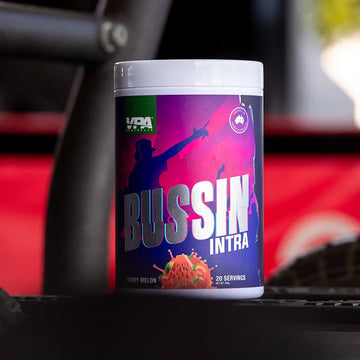
VPA's Bussin Intra comes in flavours like lemon lime and mango passionfruit, making it enjoyable to drink, which matters when you're mid-session and tired.
Who Can Benefit Most From BCAAs?
Not everyone needs BCAAs, but certain people reap a lot of value from them:
-
People training without eating first: If your workout is before breakfast, BCAAs give your muscles fuel they can use immediately
-
Endurance and high-intensity athletes: HYROX competitors, long-distance runners, and CrossFit athletes doing extended sessions benefit from BCAA support during training
-
Anyone training hard multiple times a week: When you're crushing intense sessions regularly, BCAAs support recovery and muscle repair. The BCAA benefits for women training this way are the same as for anyone else - faster recovery and better muscle preservation matter regardless of gender
-
Anyone in a calorie deficit: When you're eating less overall, BCAAs help preserve muscle you don't want to lose
-
People who struggle with hitting protein targets: If you consistently fall short on protein intake, BCAAs help fill the gap
-
Plant-based athletes: Vegans and vegetarians often have fewer complete protein sources and can benefit from supplementation
Conversely, if you're eating 1.6-2.2 grams of protein per kilogram of bodyweight daily from varied sources, you're probably fine and already getting what you need from food.
BCAAs vs Protein Powders vs EAAs
BCAAs vs Whey Protein
Now, here's an important distinction that people often get wrong. Whey protein has all nine essential amino acids, whilst BCAAs have only three. If your main goal is building muscle, and you can have food or whey protein around your workout, whey is the better choice because it has everything your body needs to build muscle.
However, if you're mid-workout and need something light and fast-absorbing, BCAAs are more useful because you don't want a full protein shake sitting in your stomach while you're lifting heavy.
BCAAs vs EAAs
EAAs include all nine essential amino acids, making them technically more comprehensive than BCAAs, and for pure muscle-building purposes, EAAs are superior. That said, BCAAs remain valuable for intra-workout use when you're training fasted or want something lightweight, as they serve different purposes in different situations.
When Is the Best Time to Take BCAAs?
Timing matters significantly, and you get the most benefit if you take them:
-
Roughly 30 minutes before training (especially if you're training fasted).
-
During your workout, by sipping throughout.
-
Or after training, within a couple of hours as part of your recovery protocol.
Taking BCAAs at random times throughout the day doesn't hurt, but the benefit drops significantly if you're not training or if you're already eating adequate protein. You might be better off spending that money elsewhere if neither of those situations applies to you.
How Much BCAA Should You Take?
Research supporting BCAA benefits typically uses 5-20 grams per day, split around training, though the exact amount varies depending on what you're using them for. VPA's BCAA 2:1:1 gives you 5 grams per serving, while Bussin Intra has 7 grams, and neither one requires megadosing.
Follow what the label says, as more isn't better, and it won't accelerate your progress.
Understanding BCAA Ratios
What Does 2:1:1 Mean?
You've probably seen "2:1:1" mentioned and wondered what it actually means. It's the ratio of leucine to isoleucine to valine, where a 2:1:1 ratio means twice as much leucine as the other two. That matters because leucine is the primary trigger for muscle protein synthesis and does the heavy lifting for muscle growth, and the 2:1:1 ratio has solid research backing for optimising muscle growth.
Is a Higher-Dose Formula Better?
Not necessarily, as it depends on your training volume and protein intake. For most people, a standard 2:1:1 ratio at 5-7 grams per serving is enough, and you're not missing out by not going higher.
VPA BCAA Options Explained
When choosing the best BCAA supplement, it comes down to what fits your training style and supplement routine. VPA offers two great options, each made for different needs:
BCAA Bussin Intra
Bussin Intra is your all-in-one option, offering 7 grams of BCAAs in that optimal 2:1:1 ratio, plus additional ingredients that work together to support your training. Beyond the core BCAAs, it includes L-Glutamine to help with muscle repair and gut health so you absorb nutrients better, Citrulline Malate to increase blood flow and get more oxygen and nutrients to your working muscles, electrolytes (magnesium, potassium, calcium) to replace the minerals you lose through sweat, and B vitamins to keep your energy production steady and reduce fatigue.
Available in five flavours (lemon lime, raspberry, peach iced tea, mango passionfruit, and grape bubblegum), Bussin Intra is designed for athletes who want everything in one drink and can sip it throughout their workout without needing anything else.
BCAA 2:1:1
VPA's BCAA 2:1:1 is simple: just the three amino acids in that 2:1:1 ratio at 5 grams per serving with nothing else added. This makes sense if you already have a supplement stack you're happy with and just want to add BCAAs, because you can mix it with your pre-workout, your electrolyte drink, or just water without it interfering with anything else you're taking. Plus, it's cost-effective, giving you 40 servings from a 200g tub.
Are BCAAs Actually Safe?
When taken for up to six months, oral BCAA supplements haven't been linked with serious side effects for most people. Occasionally, some people report nausea, headache, or mild discomfort, though that's pretty rare.
There are some situations where you should be cautious:
-
BCAAs may interfere with blood glucose levels during and after surgery
-
If you have chronic alcoholism or branched-chain ketoaciduria, discuss BCAA use with a doctor
-
If you're pregnant or breastfeeding, chat with a healthcare professional first
-
If you're on diabetes medications, Parkinson's meds, or corticosteroids, speak with your doctor before starting BCAA supplements.
Common Myths About BCAAs
Myth: BCAAs will build muscle on their own.
Reality: They trigger the process, but you still need adequate overall protein, resistance training, and proper recovery. They're a tool, not a magic solution. If the fundamentals aren't there, BCAAs won't save you.
Myth: You need BCAAs to be serious about fitness.
Reality: If you're eating enough complete protein and training consistently, BCAAs are optional. They're most useful in specific situations: fasted training, intense endurance work, or when protein intake is limited. Otherwise, you're fine.
Myth: Taking more BCAAs = faster results.
Reality: Standard doses around training do the job. Megadosing doesn't accelerate progress. You're just wasting money.
Myth: BCAAs replace a balanced diet.
Reality: They're supplements. They work best alongside solid nutrition, adequate protein, and consistent training. Nothing replaces the fundamentals.
Final Thoughts: Are BCAAs Worth It?
It depends on your situation. If you're training fasted, doing high-volume or endurance work, in a calorie deficit, or consistently falling short on protein, BCAAs can actually help your recovery and performance. Conversely, if you're eating adequate protein throughout the day and training in a fed state, you probably don't need them.
The good news is they're safe and reasonably affordable, so if you think they'll help your training, whether that's Bussin Intra's complete formula or VPA's pure BCAA 2:1:1 for custom stacking, they're definitely worth trying as long as you go in with realistic expectations.
Remember: they work best alongside a balanced diet, consistent training, and reasonable goals, and there's no supplement that replaces the fundamentals. Used the right way in the right situation, BCAAs can be a useful part of your training regimen.
References:
-
Van De Walle, G. (2022, December 6). 5 proven benefits of BCAAs (branched-chain amino acids). Healthline. https://www.healthline.com/nutrition/benefits-of-bcaa
-
Shimomura, Y., Inaguma, A., Watanabe, S., Yamamoto, Y., Muramatsu, Y., Bajotto, G., Sato, J., Shimomura, N., Kobayashi, H., & Mawatari, K. (2010). Branched-chain amino acid supplementation before squat exercise and delayed-onset muscle soreness. International Journal of Sport Nutrition and Exercise Metabolism, 20(3), 236–244. https://doi.org/10.1123/ijsnem.20.3.236
-
BIOH Nutrition. (2021, November 15). How much BCAA per day is healthy? https://biohnutrition.com/en-gb/blogs/news/how-much-bcaa-per-day
-
Stuart, A. (2024, August 20). Branched-chain amino acids. WebMD. https://www.webmd.com/vitamins-and-supplements/branched-chain-amino-acids-uses-risks


