


![[Batch-tested] Collagen Pro® - Protein Powder](http://www.vpa.com.au/cdn/shop/files/vpa-australia-collagen-powder.webp?v=1770851517&width=360)

TL;DR
Grabbed an energy drink before the gym thinking it'll do the job? Here's the thing: pre-workout vs energy drink isn't really a fair comparison because they're designed for completely different purposes. An energy drink is generally made to increase alertness and help fight fatigue throughout the day. A pre-workout supplement, on the other hand, is purpose-built specifically for training. It's engineered to help you lift heavier, go harder, and recover better. Some energy drinks in Australia are loaded with sugar, which can cause crashes mid-workout, while pre-workout supplements are packed with research-backed ingredients like beta-alanine and creatine that support performance.
So, which one makes more sense for you? Let's break down the differences.
What Is a Pre-Workout Supplement?
Purpose and Design
A pre-workout supplement is basically a multi-ingredient formula designed to enhance athletic performance. You mix a scoop with water, drink it about 20-30 minutes before you hit the gym, and it’ll help you perform better. We’re talking about new PRs, greater endurance, and sharper focus when things get tough.
The key difference? It's made specifically for training. Not for staying awake at work, not for studying, but for working out. That's the whole point.
Key Ingredients in a Pre-Workout
Good pre-workout supplements combine multiple essential pre-workout ingredients such as:
-
Caffeine (150-350mg) – Wakes your system up, reduces how hard exercise feels, improves both strength and endurance
-
Beta-alanine (2-3.2g) – Stops your muscles from getting too fatigued during heavy reps, helps you squeeze out more volume
-
Creatine monohydrate (3-5g) – Gives your muscles more ATP energy, which means more power output during hard efforts
-
Citrulline malate (6-8g) – Opens up blood vessels, gets more oxygen and nutrients flowing to your muscles, reduces fatigue
-
L-tyrosine – Keeps your mind sharp and alert during the session
-
Branched-chain amino acids (BCAAs) – Supports muscle growth, reduces muscle breakdown during training
Want the full breakdown? Here are key pre-workout ingredients explained.
What Is an Energy Drink?
Purpose and Design
An energy drink is a beverage designed to provide a quick mental energy and alertness boost. It's what you grab when you need to stay awake at work, power through a study session, or stay alert during a road trip. The formula is simple: caffeine, sugar (or artificial sweeteners), and some supporting ingredients.
It's not made for the gym, and that's okay. It’s built for general stimulation.
What's Actually in an Energy Drink
Most energy drinks in Australia follow a similar formula:
-
Caffeine (80-300mg per can) – Provides the main stimulant effect
-
Sugar (25-54g per can) – Gives quick energy but creates a crash afterwards
-
Taurine (~1,000mg) – An amino acid included for its energy-related properties
-
B-vitamins – Support energy metabolism, though energy drinks often include more than necessary
-
Guarana extract – Another caffeine source, sometimes unlabeled as part of total caffeine
-
Herbal extracts (ginseng, ginkgo, etc.) – Marketed for focus and energy
The reality is that most energy drink ingredients aren't specifically dosed for training performance. They're formulated for general alertness, which is a different goal entirely.
For a deep dive into what's actually in your favourite brands, check out ingredients in your energy drink.
Pre-Workout vs Energy Drink — Head-to-Head Comparison
|
Factor |
Pre-Workout Supplement |
Energy Drink |
|
Purpose |
Athletic performance enhancement |
General mental alertness |
|
Caffeine |
150-350mg (clinical dose) |
80-300mg (variable, less predictable) |
|
Sugar |
Minimal to zero |
25-54g per can (major issue) |
|
Beta-Alanine |
2-3.2g (research-backed) |
Absent |
|
Creatine |
3-5g (researched) |
Absent |
|
Citrulline Malate |
6-8g (blood flow support) |
Absent |
|
Targeting |
Strength, endurance, muscle pumps |
Energy, focus (general) |
|
Research Support |
Strong (AIS Group A ingredients) |
Limited beyond caffeine |
|
Sugar Crash Risk |
Low (minimal sugar) |
High (50+ grams of sugar) |
|
Cost Efficiency |
Better value for training |
Expensive for actual performance |
|
Best Used |
20-30 min before workouts |
Anytime you need alertness |
Performance: Which Actually Works Better for Training?
Caffeine Is Where They Overlap
When it comes to pre-workout supplements vs energy drinks, it’s important to know that both contain caffeine, and both will give you a stimulant effect and improve alertness. Caffeine in pre-workout is scientifically proven to help with strength, endurance, and focus during exercise. That's the common ground, and it's a legitimate one.
But that's where the similarity ends.
Where Pre-Workout Pulls Ahead
A quality pre-workout supplement includes ingredients specifically dosed to support training outcomes. Beta-alanine builds up carnosine in your muscles, which buffers the acid buildup that causes fatigue during heavy sets. Creatine monohydrate increases ATP production, providing more energy for your muscles during intense efforts. Citrulline malate enhances blood flow and oxygen delivery to working muscles, reducing fatigue and improving endurance.
An energy drink before a workout doesn’t make sense because it doesn't include these performance-supporting compounds.
The Sugar Problem
This is where the two really diverge in terms of workout suitability. A standard energy drink contains 25-54 grams of sugar per can. That creates a rapid blood sugar spike followed by a crash. If you're mid-workout when that crash hits, your energy tanks and everything feels heavy.
A pre-workout supplement has minimal to no sugar. You get sustained energy throughout your entire session without the crash, which is a much better experience when you're trying to perform at your best.
What About Sugar-Free Energy Drinks?
Sugar-free versions are an improvement since they eliminate the crash. However, they replace sugar with artificial sweeteners (aspartame, sucralose, stevia), which some people have concerns about in terms of long-term metabolic effects. More importantly, a sugar-free energy drink still isn't formulated specifically for training. You're still missing pre-workout supplements' performance ingredients like beta-alanine, creatine, and citrulline malate.
So while sugar-free is better than the regular version, it's still not the ideal choice for gym training.
If you're looking for pre-workout alternatives that actually support performance, a good pre-workout supplement beats both regular and sugar-free energy drinks, any day.
What About Pre-Workout vs Coffee?
Coffee's a legit option. A single cup has 90-100mg caffeine, which is enough to boost training performance without going overboard. It's cheap, easily available, and you get antioxidants as a bonus.
The catch? You don't get the performance pre-workout ingredients. No beta-alanine. No creatine. No citrulline malate. Coffee is fuel; pre-workout supplements are fuel plus actual training enhancements.
If your only goal is staying awake, coffee works. If you want to perform better in the gym, pre-workout supplements are the way to go.
Moreover, when comparing pre-workout vs coffee, remember that most quality pre-workouts take effect within 20-30 minutes, so understanding how long does pre-workout last (typically 3-5 hours) helps you time your training properly.
For a full comparison of stimulant options, check out stim vs non-stim pre-workout.
A Third Option: Energy Gels (For During Training, Not Before)
Now, here's something people often confuse: energy gels aren't part of the pre-workout supplement vs energy drink question. They're a different category entirely, designed for a different purpose.
If you're training for 60+ minutes (marathons, HYROX, long endurance efforts), you need fuel during your effort, not before it. That's where RPG Endurance & Energy Gels come in. They deliver 25g of fast-absorbing carbs, 500mg BCAAs, and electrolytes in a single sachet. You take them during your training, not 30 minutes before. The Green Apple version includes 36mg caffeine for focus, while Raspberry and Caramel Biscuit are caffeine-free for those sensitive to stimulants.
These are purpose-built for athletes pushing beyond 90 minutes of continuous effort - a different tool for a different job entirely.
Which Should You Choose?
Choose a Pre-Workout Supplement If:
-
You're training hard and want measurable pre-workout benefits
-
You need sustained energy and focus throughout your workout
-
You're sensitive to sugar or want to avoid energy crashes mid-session
-
You're doing strength training, high-intensity work, or endurance efforts
-
You want ingredients that are research-backed and dosed appropriately
An Energy Drink Might Be OK If:
-
You need to stay alert at work, during study, or on a long drive
-
You prefer ready-to-drink convenience over mixing a powder
-
You're not focused on training performance specifically
-
You enjoy the taste and want an occasional boost
Both have their uses. Energy drinks in Australia work well for everyday alertness. For gym performance, though, pre-workout supplements are the better fit.
VPA's Pre-Workout Options
If you're looking to optimise your training, we've got two options depending on your goals:
-
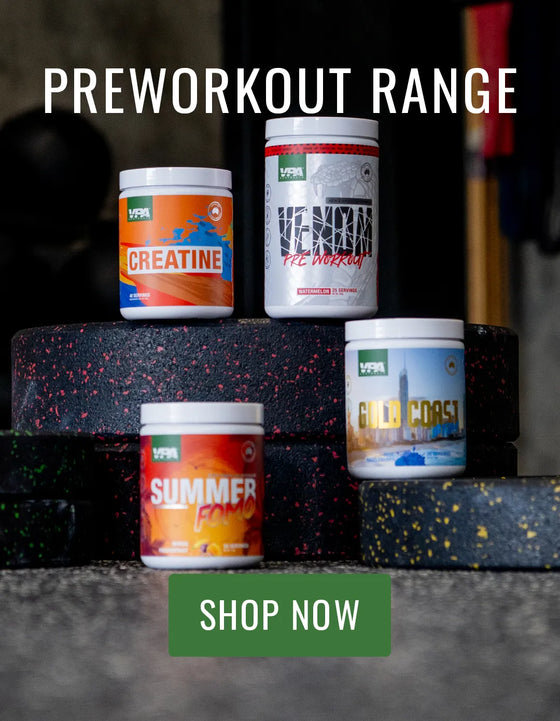
Gold Coast Stim Pre-workout - 230mg caffeine, solid doses of beta-alanine, creatine, and citrulline malate. Built for everyday training and also works great as a pre-workout supplement powder for beginners. Pick your favourite from 5 different flavours, and mix it before sessions when you want to perform well.
-
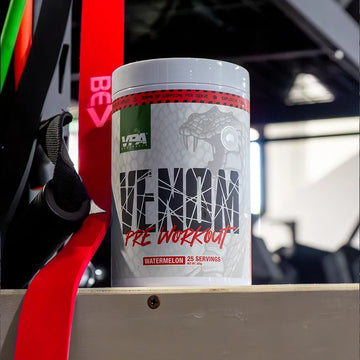
Venom High Stim Pre-workout - 287mg caffeine (the highest legal dose), with elevated doses of creatine, citrulline, and beta-alanine. Also includes ashwagandha and Siberian ginseng for enhanced recovery and endurance. This Venom High Stim Pre-Workout Powder is for serious athletes pushing maximum intensity. The recommended dosage is one serving per day. And the best part? You have three flavours to choose from.
Browse the full pre-workout supplements collection to see what fits your training style.
Conclusion
So, coming back to energy drink vs pre-workout - once you understand what each is designed for, the choice becomes clearer for gym training specifically. Energy drinks in Australia are effective at what they're built for: keeping you alert in everyday situations. For training, though, a pre-workout supplement is purpose-built to deliver better pre-workout benefits.
An ideal pre-workout supplement provides sharper focus, stronger lifts, and consistent energy without the sugar crash. If you're serious about your training, switching to a pre-workout supplement is a smart move. You'll notice the difference: better pumps, sustained focus, and more measurable gains in training sessions.
Ready to try it? Shop VPA Pre-Workout Supplements and see what works best for you.
Frequently Asked Questions
Can I use an energy drink instead of pre-workout?
You can use an energy drink as a pre-workout, and it'll provide a caffeine boost. However, you'll be missing the performance-enhancing ingredients like beta-alanine, creatine, and citrulline that support strength, endurance, and recovery. Plus, the high sugar content can create a crash mid-session. For serious training, a pre-workout supplement is more effective, but an energy drink works if that's what you have on hand.
Is pre-workout stronger than an energy drink?
It depends on what you mean by stronger. Some extreme energy drinks do pack 300mg+ caffeine, matching some pre-workout supplements. But is pre-workout better than an energy drink? A pre-workout supplement is engineered with research-backed doses of compounds energy drinks simply don't include. You'll perform better and avoid the crash.
What's the difference between pre-workout and energy drink ingredients?
Pre-workout ingredients are dosed at clinically effective levels for training: beta-alanine (2-3.2g), creatine (3-5g), citrulline malate (6-8g). These are researched for exercise performance. Energy drink ingredients are primarily caffeine, sugar, taurine, and herbal extracts. Beyond caffeine, most energy drink ingredients don't have strong research at the doses typically used. Pre-workouts target gym performance; energy drinks in Australia target general alertness.
Are sugar-free energy drinks OK before training?
They're better than regular versions since they eliminate the crash. However, they still lack the performance-enhancing compounds that make pre-workout supplements effective for training. If gym performance is your goal, a pre-workout supplement is a better choice.
How much caffeine is in a pre-workout compared to an energy drink?
Most pre-workout supplements contain 150-350mg caffeine per serving. Energy drinks in Australia typically range from 80-300mg, with larger cans around 160mg. The key difference isn't just the amount - it's what comes alongside it. Caffeine in a pre-workout pairs with performance-supporting ingredients like beta-alanine and creatine. Energy drink caffeine comes with only sugar. A pre-workout supplement powder for beginners like Gold Coast Stim delivers 230mg in a formula designed for training.
Is pre-workout safer than energy drinks?
Pre-workout supplements are typically formulated with transparent ingredients and clinical dosing, often third-party tested. Energy drinks include higher sugar content and multiple stimulants that, when combined, may cause energy drink side effects. Good pre-workout supplements are designed with athlete safety in mind and are researched for use during training.
Can I mix an energy drink with pre-workout?
Not recommended. You'd be combining multiple stimulants and potentially exceeding safe caffeine limits, which increases the risk of jitteriness, anxiety, sleep disruption, and heart-related side effects. Stick with one or the other for best results.
What's the best pre-workout supplement in Australia?
The best pre-workout supplement in Australia depends on your goals and stimulant tolerance. Gold Coast Stim Pre-workout is beginner-friendly with balanced ingredients and 230mg caffeine. Venom High Stim Pre-Workout Powder is for serious athletes who want the highest legal caffeine dose (287mg) plus enhanced recovery support. Both are third-party tested, drug-test safe, and made in VPA's facility. Check the full pre-workout supplements collection to find your fit.
Is coffee a good substitute for pre-workout?
Coffee is legitimate for the caffeine boost - one cup gives about 100mg without the crash or excessive sugar. However, you miss out on performance ingredients like beta-alanine, creatine, and citrulline malate that pre-workout supplements provide. Coffee is fuel; pre-workout supplements are fuel plus training enhancement. For training goals, pre-workout supplements are more effective. Check out pre-workout snack ideas for more options.
References:
-
Harty, P. S., Zabriskie, H. A., Erickson, J. L., Molling, P. E., Kerksick, C. M., & Jagim, A. R. (2018, August 8). Multi-ingredient pre-workout supplements, safety implications, and performance outcomes: A brief review. Journal of the International Society of Sports Nutrition, 15(1), Article 41. https://doi.org/10.1186/s12970-018-0247-6
-
Spradley, B. D., Crowley, K. R., Tai, C. Y., Kendall, K. L., Fukuda, D. H., Esposito, E. N., Moon, S. E., & Moon, J. R. (2012, March 30). Ingesting a pre-workout supplement containing caffeine, B-vitamins, amino acids, creatine, and beta-alanine before exercise delays fatigue while improving reaction time and muscular endurance. Nutrition & Metabolism, 9, Article 28. https://doi.org/10.1186/1743-7075-9-28
-
Texas Health. (2023, December 20). What you need to know about pre-workout supplements. https://www.texashealth.org/areyouawellbeing/Staying-Fit/What-You-Need-to-Know-About-Pre-Workout-Supplements
-
Garcia, M. C. (2023, August 1). For kids and teens, energy drinks may have harmful side effects. UCLA Health. https://www.uclahealth.org/news/article/teens-energy-drinks-side-effects
-
Gold's Gym. (2025, May 15). What is in pre-workout? Understanding its usage and benefits. https://www.goldsgym.com/blog/what-is-in-pre-workout-usage-and-benefits/
-
WebMD. (2025, July 11). Health benefits of pre-workout supplements. WebMD. https://www.webmd.com/fitness-exercise/health-benefits-pre-workout-supplements
-
Duquette, S., & González Duquette, C. (2024, September 24). Pre-workout vs energy drinks: Differences explained. Outlift. https://outlift.com/energy-drinks-vs-pre-workout-supplements/