
Your Cart is Empty



![[Batch-tested] Collagen Pro® - Protein Powder](http://www.vpa.com.au/cdn/shop/files/vpa-australia-collagen-powder_1600x.webp?v=1770851517)
![[Batch-tested] Collagen Pro® - Protein Powder](http://www.vpa.com.au/cdn/shop/files/vpa-australia-collagen-powder_2000x.webp?v=1770851517)


BCAAs for women: Yes or No?
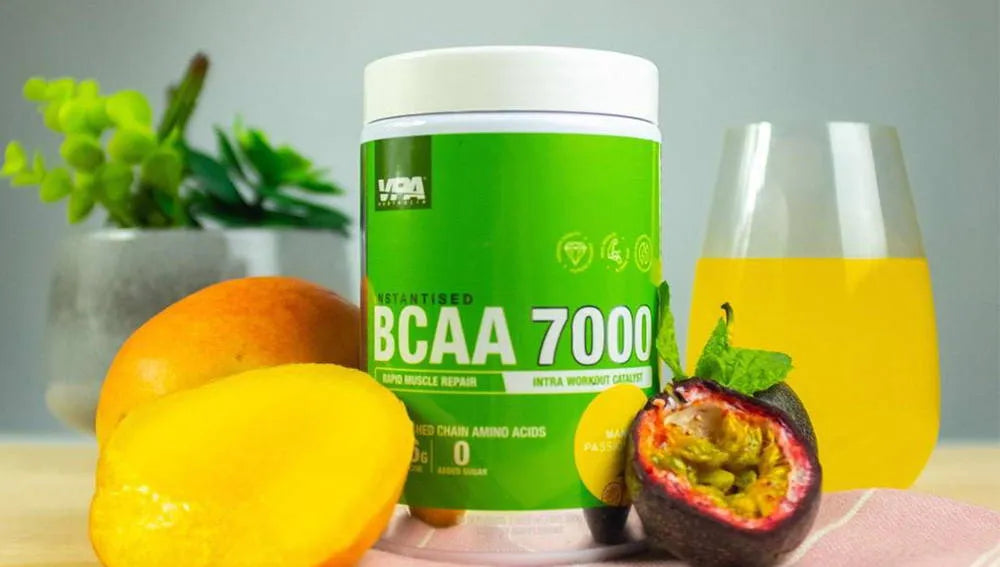

Most literature suggests no use for BCAA’s in a diet that is already adequate in high biological value protein. Adding BCAA’s on top of a high protein diet can even dampen muscle synthesis in men. But what about BCAAs for women? Do they help, and if so, how much and when do you take it?
How do I know if I’m getting enough protein?
Nutrition guidelines suggest an intake of 1g of protein per kg of body weight per day. This is half of what I recommend as a performance dietitian for women chasing strength gains or hypertrophy. Protein intake is even more important if you are a woman who identifies as being part of one or more of these groups or are:
- Following a plant-based diet
- Under-eating or under-fuelling
- Eliminating food groups
- If you are peri- or post-menopausal
Women in these groups have higher protein needs, and need rapid intake of protein post-training to mitigate muscle loss and help with brain fog.
How can BCAAs help women?
Supplementing with BCAAs could be a game-changer if you identify with one or more of the above groups. BCAAs are a cluster of three essential amino acids. The most important of these is leucine as it is the precursor to muscle protein synthesis. For women, the main benefit of BCAA lies in its intracellular signalling pathway involved in protein synthesis and it’s ability to counter central nervous system fatigue.
How much BCAA do I need and when should I take it?
I recommend a standard dose of 5-7g of BCAAs under the following conditions:
- Before strength training in the morning if you are unable to have a high protein breakfast first.
- Women doing fasted cardio – no woman should train fasted!
- Peri- or Post- menopausal women before strength training. Whether you are a novice lifter or national record holder, BCAAs would benefit you.
- Female athletes on restrictive energy budgets who are in the late stages of elite contest preparation.
What BCAA supplement should I take?
My preference is unflavoured BCAAs. VPA®offers BCAA 2:1:1 in 200g. They also offer BCAA 7000 in 300g tubs as well as sample packs to try all 5 flavours. Check them out below.
Sold out
Sold out
Sold out
Sold out
Sold out
Hopefully this blog has explained how and when BCAA’s can benefit women. Are BCAAs the magic pill to a crappy diet? NO…. whole foods always come first! As always, supplementation needs to be specific to you and take into account dietary assessment and lifestyle considerations. If you want to take the guesswork out of your diet, please feel free to get in touch using the details below.


