



![[Batch-tested] Collagen Pro® - Protein Powder](http://www.vpa.com.au/cdn/shop/files/vpa-australia-collagen-powder.webp?v=1770851517&width=360)


TL;DR
Creatine is both a naturally occurring compound and a laboratory-produced supplement that plays a crucial role in human energy metabolism. The body makes creatine naturally in the liver, kidneys, and pancreas from three amino acids: glycine, arginine, and methionine, and stores about 95% of it in skeletal muscles.
Where does creatine come from? Natural sources such as red meat, poultry, and fish also provide creatine, but only in small amounts. For athletes and individuals with high energy demands, this natural supply is often not sufficient, which is why supplementation is common.
In supplements, creatine is made synthetically in laboratories from sarcosine and cyanamide through controlled chemical reactions. This process ensures large-scale production, consistency, and purity. The most popular form is creatine monohydrate, which is affordable, safe, and the most researched. Alternative forms, such as creatine HCl, exist, but they are more expensive and have not been proven to be more effective. Synthetic creatine is also vegan-friendly, as it does not involve animal-derived ingredients.
Quality matters greatly. Low-grade creatine may contain impurities, including heavy metals. Choosing supplements with GMP certification and third-party testing ensures safety. Whether taken before or after a workout, a consistent daily intake of 3-5 g is the most effective way to utilise creatine for performance, recovery, and strength gains.
Estimated reading time: 7-8 minutes
The Body’s Own Creatine Factory
Creatine occurs naturally in the body in muscle cells. Creatine is synthesised mainly in the liver, kidneys, and pancreas using the amino acids arginine, glycine, and methionine (creatine amino acids). The body stores approximately 95% of its creatine in skeletal muscles, with the remaining 5% distributed across the brain, cardiac muscle, and testicles.
As one of the most crucial compounds for energy production, particularly in short, explosive movements such as sprinting and HIIT, creatine plays a significant role. It works by helping to regenerate adenosine triphosphate (ATP), the primary energy fuel used by muscle cells.
How is creatine made naturally in the body?
-
The body produces creatine from three amino acids: glycine, arginine, and methionine. These are often referred to as creatine amino acids.
-
The synthesis begins in the kidneys, where arginine and glycine form guanidinoacetate. 1
-
Guanidinoacetate then travels to the liver, where methionine donates a methyl group, converting it into creatine.
-
The body’s liver, pancreas, and kidneys can also make about 1 gram of creatine per day. 2
Where does creatine come from naturally?
-
Food sources: Creatine occurs naturally in animal-based foods, such as red meat (beef, pork), poultry, and fish (salmon or herring). For example, 1 kg of raw meat contains about 4-5 g of creatine. 3
-
Storage in muscles: Once produced or consumed, creatine is stored in muscles as phosphocreatine, ready to boost your body with short bursts of energy.
-
Limitations of natural production: Although the body produces some creatine, it is often insufficient for athletes or individuals engaging in intense and explosive training. This is why supplementation through creatine monohydrate is common.
What is creatine made from in the body?
Creatine is derived from dietary amino acids. This makes it unique because, unlike vitamins or minerals, it is not an external nutrient but a compound our body can produce on its own.
How Creatine Is Made in the Lab
How creatine monohydrate is made:
-
What is creatine made from? Commercial creatine is typically produced synthetically. The process starts with sarcosine (a derivative of glycine) and cyanamide.
-
When combined under controlled heating and pressure, these compounds react to form creatine. However, this creatine contains creatine crystals, which are then purified using a centrifuge to separate impurities.
-
As discussed above, raw creatine is purified, crystallised, dried, and milled into a fine powder.
-
Finally, how is creatine monohydrate made? To make creatine monohydrate, the dried creatine is milled into an ultra-fine powder around a 200-mesh size, which helps it dissolve more easily.
Why synthetic production?
-
It ensures consistency, purity, and scalability.
-
Natural extraction from food would not be efficient or cost-effective, making creatine monohydrate expensive and less available.
Forms of creatine supplements:
-
Creatine Monohydrate - The most researched and reliable form. It is stable, affordable, and proven effective by extensive research.
-
Creatine HCl (Hydrochloride) - As the name suggests, creatine HCL is creatine hydrochloride – creatine molecularly bound with hydrochloric acid to enhance solubility and absorption. Creatine HCl is more soluble in water and easier to digest, though not necessarily more effective. Limited studies suggest its effectiveness, and it's generally more expensive.
Other forms of creatine include Buffered Creatine (Kre-Alkalyn) and Creatine Ethyl Ester, which are marketed as more stable. Still, they are more expensive, and studies have not shown them to be superior to monohydrate.
Is creatine vegan?
Yes, synthetically produced creatine is vegan-friendly because it does not come from animal tissue. Unlike food-derived creatine, supplements use laboratory processes that replicate the natural molecule.
Almost all commercially available creatine today is synthetically produced in laboratories through chemical reactions involving sarcosine (a derivative of the amino acid glycine) and cyanamide (a compound composed of carbon, nitrogen, and hydrogen). These processes do not include animal ingredients and can produce 100% plant-based creatine.
However, not every product is guaranteed to be vegan. Some may include non-vegan additives or gelatine capsules from animal products. Again, there is a risk of cross-contamination during production. Always check for a vegan certification or clear labelling to ensure you get a product that aligns with your ethics and dietary preferences.
Natural vs Synthetic: How They Compare
Both natural and synthetic creatine have the same chemical structure. The key difference lies in the source (food/body versus lab synthesis) and the level of purity achievable through modern manufacturing processes.
Quick Comparison Table
| Factor | Natural Creatine (Food/Body) | Synthetic Creatine (Supplements) |
|
Source |
Produced in the body or derived from meat/fish |
Made from sarcosine + cyanamide in labs |
|
Purity |
Limited by natural synthesis, or food source |
Can be purified to pharmaceutical grade |
|
Availability |
Limited (1-2 g/day from food/body) |
3-5 g can be easily supplemented |
|
Suitability |
Not enough for athletes or those engaging in explosive physical activity regularly |
Convenient, soluble, concentrated, and vegan-friendly for all body types |
Creatine Quality & Safety Standards
Not all creatine supplements are created equal. Like other dietary supplements, they may contain heavy metals such as lead, arsenic, and mercury. 4 Impurities such as creatinine, dicyandiamide, and heavy metals can appear in poorly manufactured products. 5 To ensure safety, look for the following:
-
GMP Certification: Compliance with Good Manufacturing Practices ensures consistency and safety.
-
Third-Party Testing: Brands with Informed-Sport or NSF certification confirm purity and absence of banned substances.
-
Micronised Form: Smaller particle size improves solubility and absorption.
Best creatine in Australia:
Athletes and gym-goers often compare products to ensure quality. The best creatine supplements in Australia are typically sourced from trusted brands.
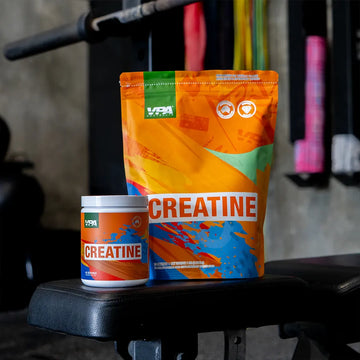
Try VPA Australia’s 100% pure, pharmaceutical-grade creatine monohydrate powder that maximises strength and recovery.
Unlike other supplement providers, we take extreme measures to ensure our supplements are the highest quality in the market, employing third-party lab testing by the National Measurement Institute, the authority for Australia’s chemical, biological, physical and trade testing.
Understanding how creatine is made is crucial for consumers. It empowers them to make informed choices, avoid low-quality products, and address dietary concerns. This knowledge is a powerful tool in the hands of health-conscious individuals.
Knowing how creatine is made helps consumers in several ways:
-
Avoiding low-quality products: Some cheap imports may contain harmful impurities.
-
Choosing the proper form: Understanding creatine HCl vs. monohydrate helps make informed choices. Monohydrate is proven, while HCl may help those with digestive issues, although it's more expensive with no proven gains in effectiveness.
-
Addressing dietary concerns: For example, is creatine suitable for vegans? Yes, because synthetic production does not involve the use of animals.
-
Maximising effectiveness: Knowing the best way to take creatine - typically 3-5 g daily, with or without a loading phase – ensures optimal results. Timing (whether you take creatine before or after a workout) is less important than consistency, although some evidence suggests that taking creatine post-workout may slightly improve its uptake.
Creatine HCl vs Monohydrate
Creatine Monohydrate:
-
Most researched, with decades of evidence supporting safety, efficacy, and bioavailability.
-
More affordable than alternative forms.
-
May cause mild bloating in some individuals.
Creatine HCl:
-
Claimed to be more soluble, reducing stomach discomfort.
-
Requires smaller doses due to higher solubility.
-
However, lacks the same depth of research as monohydrate, with no proven gains in efficacy.
Verdict:
When choosing between creatine HCl and monohydrate, the latter is generally the better option for most users due to its strong research base and cost-effectiveness. In short, creatine monohydrate is considered the gold standard for supplementation. HCl may be worth considering if you experience digestive discomfort with monohydrate.
FAQs
What are the ingredients in creatine?
Creatine is made from three amino acids: glycine, arginine, and methionine. In supplements, it is produced from sarcosine and cyanamide.
Is creatine natural or synthetic?
Both. The body naturally produces creatine, and it can be obtained from food. However, most supplements are synthetically manufactured for consistency, purity, and adequate supplementation in athletes.
Can you get creatine from food?
Yes. Meat, poultry, and fish contain creatine. For example, 1 kg of raw meat provides about 4-5 g of creatine. However, it is impractical to consume 1kg of raw meat, and hence, relying on food alone for athletic performance needs is not feasible.
Do creatine gummies work?
Creatine gummies are often unreliable—independent lab tests show they’re frequently under-dosed, unstable, and overpriced compared to creatine monohydrate powder, making powder the more effective and trustworthy option.
Read more about it here.
Is creatine vegan-friendly?
Yes. While food-based creatine is derived from animal sources, synthetic creatine monohydrate supplements are generally vegan-friendly.
Are there impurities in creatine supplements?
Low-quality products may contain impurities like creatinine, dicyandiamide, or heavy metals. Reputable brands adhere to strict quality controls and undergo third-party testing to ensure product purity and safety.
References
-
da Silva RP, Nissim I, Brosnan ME, Brosnan JT. Creatine synthesis: hepatic metabolism of guanidinoacetate and creatine in the rat in vitro and in vivo. Am J Physiol Endocrinol Metab. 2009;296(2):E256–E261. doi:10.1152/ajpendo.90547.2008
-
Mayo Clinic Staff. Creatine. Mayo Clinic. Accessed September 1, 2025. https://www.mayoclinic.org/drugs-supplements-creatine/art-20347591
-
ProteAlpes. The best creatine‑rich foods. ProteAlpes. Published August 26, 2024. Accessed September 1, 2025. https://protealpes.com/en/creatine/aliments-riches-en-creatine/#:~:text=Indeed%2C%20the%20most%20creatine%2Drich%20foods%2C%20such%20as,eat%20around%201%20kg%20of%20beef%20steak
-
Beaconpoint Labs. Creatine supplements and third-party testing. Beaconpoint Labs. Published September 26, 2024. Accessed September 1, 2025. https://beaconpointlabs.com/creatine-supplements-and-third-party-testing/#:~:text=Creatine%20supplements%2C%20like%20other%20dietary
-
Moret S, Prevarin A, Tubaro F. Levels of creatine, organic contaminants and heavy metals in creatine dietary supplements. Food Chem. 2011;126(3):1232–1238. doi:10.1016/j.foodchem.2010.12.028


