



![[Batch-tested] Collagen Pro® - Protein Powder](http://www.vpa.com.au/cdn/shop/files/vpa-australia-collagen-powder.webp?v=1770851517&width=360)


TL;DR
Functional strength training builds strength for real-world movement. Instead of isolating one muscle group at a time, you're training your entire body to work together - squatting, pushing, pulling, hinging, lunging, rotating, and carrying. It's the closest thing to sports-specific training you can do in a gym. You'll get stronger, move better, stay injury-free, and yes, you'll build muscle too. The best part? It works for everyone - athletes, gym beginners, runners, and anyone who wants to be capable of handling what life throws at them.
What Is Functional Strength Training?
Functional strength training is exercise designed to prepare your body for the movements you actually do in everyday life. It's the difference between being able to deadlift 100kg and being able to pick up a heavy box off the ground without injury.
Where traditional strength training usually focuses on isolating individual muscles like bicep curls, leg extensions, and chest flyes, functional training uses compound movements that engage multiple muscle groups and joints simultaneously. It mimics how your body naturally moves: squatting down to grab something, pressing overhead to reach a shelf, lunging forward to catch your balance, and rotating your spine without pain. The key difference is this: functional training doesn't just make you stronger in the gym. It makes you stronger for life.
Squatting down to pick up a heavy box? That's functional. Pressing weight overhead to grab something from the top shelf? Functional. Carrying heavy groceries in both hands while maintaining good posture? Functional. Hiking with a heavy backpack, playing with your kids, moving house, playing sport - these are all things functional strength training directly prepares you for.
Functional Strength vs. Traditional Strength Training — What's the Difference?
Functional vs traditional strength training approaches differ a LOT in their priorities and methods, but they both build strength.
-
Traditional strength training typically focuses on one muscle group per session or day. You might do bench presses to target your chest, then isolate your triceps with specific exercises. The goal is usually to increase muscle size, strength in that specific movement, and muscular endurance. Equipment is basically machines and barbells, and progress is measured by how much weight you can lift.
-
Functional strength training is all about compound exercises that engage multiple muscles and joints at once. Exercises move in multiple planes, not just forward and back, but side to side and with rotation. A squat isn't just a squat, it's loaded differently and performed with different stances, sometimes on one leg. Equipment is also varied. You use dumbbells, kettlebells, resistance bands, suspension trainers, your own bodyweight, and even unconventional tools like sandbags or sleds.
The reality? The best training plan includes both. Traditional strength training builds raw power and muscle mass. Functional fitness ensures that strength translates to the real world and reduces injury risk overall.
The 7 Functional Movement Patterns You Need to Train
Every human movement pattern falls into one of seven categories. Master these, and you've got the basics right for functional strength training.
1. Squat — The King of Lower Body Function
The squat is the foundation. Sitting down into a chair, picking something up off the ground, standing up from a seated position - it's all a squat pattern. In the gym, that's goblet squats, barbell back squats, front squats, or pistol squats. The deeper you can squat with control, the more functional strength you develop. Poor squat mechanics lead to knee pain, hip issues, and back problems. So master the squat, and everyday life becomes easier.
2. Hip Hinge — The Pattern Most People Never Train
The hip hinge is different from a squat. Instead of bending at the knees, you're hinging at the hips. Think of it as closing a car door with your backside. Deadlifts, Romanian deadlifts, and good mornings are hip hinges. This pattern is important for picking up heavy objects safely and protecting your lower back. Most people never train it intentionally, then wonder why their back hurts when they lift something.
3. Push — Horizontal and Vertical
Push movements come in two directions: horizontal (bench press, push-ups) and vertical (overhead press, handstand push-ups). Horizontal pushes build chest, shoulders, and triceps. Vertical pushes are a bit rare in newer training plans, but absolutely crucial - they build shoulder stability and strength that carries over to everything from throwing to climbing.
4. Pull — The Most Neglected Pattern in Commercial Gyms
Pull movements like pull-ups, rows, and lat pulldowns are kind of underrated when compared to pushing. This imbalance is a problem. Overworked pecs and underworked lats can pull your shoulders forward, causing postural issues and pain. Strong pulling strength is a must for shoulder health, back strength, and real-world capability (hanging, climbing, pulling yourself up).
5. Lunge / Single-Leg — Building Real-World Stability
Most everyday movement is unilateral (one leg at a time). Walking is just repeated lunges. Yet many people only train bilateral movements (both legs at once). Single-leg exercises like lunges, step-ups, and single-leg deadlifts build the stability and strength your body actually needs. They also expose and fix strength imbalances between sides.
6. Rotation / Anti-Rotation — Power and Injury Prevention
Your spine rotates. You twist to look over your shoulder, rotate to pick something up to the side, and pivot when you change direction. Core rotation exercises (like Pallof presses or wood chops) build rotational power and stability. Anti-rotation exercises (where you resist rotation) build core strength that protects your spine. Both are important.
7. Carry — The Forgotten Functional Movement
Farmer's carries (walking with a heavy weight in both hands), suitcase carries (weight on one side), overhead carries - these are simple but brutally effective. They build grip strength, core stability, shoulder stability, and the ability to move with heavy loads all at once. This is as functional as it gets.
Functional Strength Training vs. Bodybuilding — Which Is Right for You?
Bodybuilding and functional strength training serve different goals, but they're not mutually exclusive.
Bodybuilding focuses on muscle aesthetics and size. You train individual body parts with isolation exercises and push muscles to failure. The goal is symmetry, proportion, and peak visual muscle.
Functional strength training, on the other hand, prioritises movement quality, real-world strength, and athleticism. You train movement patterns, not individual muscles. The goal is capability - being able to do things, not just look a certain way.
The bottom line? You don't have to choose. The best approach combines both philosophies. You train for function and build muscle in the process. Compound exercises build muscle while improving movement quality. You get stronger, look better, and become more capable. That's the sweet spot.
The Benefits of Functional Strength Training
Better Performance in Sport and Daily Life
When your whole body is strong and works synergistically, you develop a certain flow and strength. You move better, you're more athletic, and you can handle physical demands - whether that's a sport, a labour-intensive job, or just life.
For athletes specifically, functional strength training is the closest thing to sports-specific training you can do in a gym. This is why elite rugby players, netball athletes, basketball players, and AFL footballers all incorporate functional fitness into their training.
Reduced Injury Risk
Poor movement patterns cause injury. Weak glutes and hamstrings? Your knees suffer. Weak core? Your lower back takes the hit. Weak posterior chain? Your shoulders roll forward. Functional training identifies and fixes these weak links before they become problems. You're not just getting stronger, you're building resilience.
Improved Mobility and Flexibility
Functional training demands a full range of motion. You squat deep, you hinge fully, you press overhead completely. The more a muscle stretches, the more it contracts. Training through a full range of motion builds both strength and mobility. You move better, feel better, and stay injury-free for longer.
Carries Over to Everything Else You Do
This is the real win. You train in the gym so you can perform better outside it. Walking out of the gym exhausted but capable - that's functional strength training for you. You're not limping out after annihilating your legs with drop sets and negatives. You're leaving stronger, more coordinated, and ready to handle physically demanding situations.
A Functional Strength Training Programme — How to Structure Your Week
Session Structure — What a Functional Training Workout Looks Like
A functional strength training session usually includes:
-
Prehab/Dynamic Warm-Up (5–10 minutes): Foam rolling, dynamic stretches, movement prep. This primes your nervous system and increases blood flow. Don't skip it.
-
Main Strength Work (20–30 minutes): Compound exercises at lower reps (3–8 range) with longer rest periods. This is where you build raw strength.
-
Hypertrophy/Conditioning Supersets (15–20 minutes): Higher rep ranges (8–15), shorter rest. This builds muscle and work capacity.
-
Core/Finishing Work (5–10 minutes): Core stability, anti-rotation, carries. This rounds out the session and builds resilience.
-
Stretching (5 minutes): Static stretches targeting worked muscles and problem areas.
Total time: roughly 60 minutes. Anything longer means you're wasting time, not training harder.
Sample 3-Day Weekly Schedule
Workout Notation: "4 × 5" means 4 sets of 5 reps. "3 × 10 each leg" means 3 sets of 10 reps per leg. "3 lengths" means complete the distance three times.
Monday: Strength Focus
-
Barbell back squats: 4 × 5
-
Barbell Romanian deadlifts: 4 × 5
-
Superset: Incline dumbbell press + wide-grip pull-ups: 4 × 5–8
-
Superset: TRX rows + plyometric push-ups: 3 × 10–15
-
Core work + sprint intervals
Wednesday: Hypertrophy & Muscular Endurance
-
Superset: Standing barbell shoulder press + rear delt rows: 4 × 10–15
-
Bulgarian split squats: 4 × 10 each leg
-
Superset: Dumbbell curls + triceps dips: 4 × 10–15
-
Superset: Dumbbell deadlifts + single-leg calf raises: 3 × 10–15
-
Farmer's walk or sled drag: 3 lengths
Friday: Power & Conditioning
-
Clean and press: 3 × 5–8
-
Jump squats or box jumps: 4 × 10
-
Walking lunges: 3 lengths
-
Plyometric push-ups: 3 × 5–8
-
Bent-over rows: 3 × 5–8
-
3-way planks + sprint intervals
Remember - Rest days are crucial. Your body adapts during recovery, not during the workout.
How to Progress — The Principle of Progressive Overload
Progressive overload means gradually increasing the challenge. This can be:
-
Adding weight to the bar
-
Increasing reps or sets
-
Decreasing rest periods
-
Improving movement quality
-
Adding unilateral variations (single-leg instead of bilateral)
Write it down. Track your workouts. If you're not progressing, you're stalling. Small, consistent improvements over weeks and months add up to serious strength and conditioning gains.
Is Functional Strength Training Right for You?
For Athletes and Team Sport Players
If you play rugby, netball, basketball, AFL, or any sport requiring explosive power, lateral movement, and whole-body coordination, functional strength training is the way to go. As we said, it's the closest thing to sport-specific training you can do in a gym.
Professional teams know this. The NRL Dolphins and Sunshine Coast Lightning all prioritise functional fitness because elite athletes understand that isolated strength doesn't translate to field performance. VPA is proud to support these teams with muscle recovery supplements that help athletes perform at the highest level.
For Gym Beginners
Now, you don't need complicated programming. Start with the seven movement patterns. Master bodyweight versions first: air squats, push-ups, pull-ups or inverted rows, lunges, hinges, rotations. Once you've mastered the basics, add external load. Always prioritise quality over quantity and form over ego.
For Runners and Endurance Athletes
Runners often neglect strength and conditioning, which is a mistake. Functional training builds the strength and stability that prevent injury, improves running economy, and increases power. Whether you're making a half-marathon training plan or building general endurance, functional strength training delivers results. Plus, runners benefit from the cardiovascular demands of functional circuits - it's conditioning work built into strength training.
Combined with supplements for runners and endurance athletes like creatine and BCAAs, you'll recover even faster and train harder.
Fuelling Your Functional Strength Training — What to Take and When
Training hard demands proper nutrition. You can't out-train a bad diet, and you can't build muscle without adequate protein and recovery support.
Protein — Building the Muscle Your Training Demands
Your muscles need protein to repair and grow. The research is detailed: protein supplementation combined with resistance training significantly increases muscle building and strength. You're looking at roughly 1.6-2.2 grams of protein per kilogram of bodyweight daily.
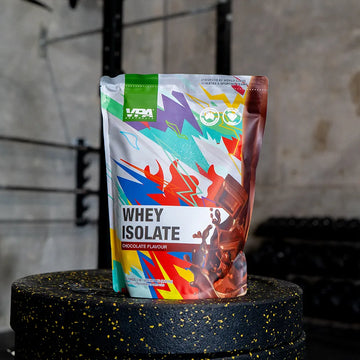
VPA Whey Protein Isolate (WPI) delivers 27g of premium protein per serving with 7.8g of BCAAs and 4.2g of leucine - the amino acid that directly triggers muscle protein synthesis. It's rapidly absorbed, nearly lactose-free, and ideal post-workout when your muscles are primed to accept nutrients. This is one of the best supplements for muscle gain due to its rapid absorption and complete amino acid profile.
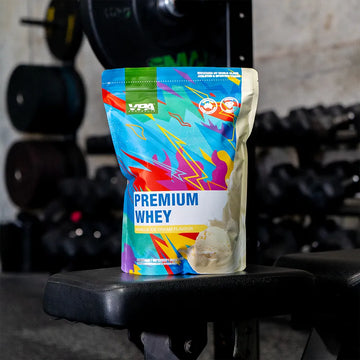
VPA Whey Protein Concentrate (WPC) offers 24g of protein per serving at a more affordable price point. With 19 delicious flavours, it's perfect for everyday protein support, whether you're building muscle or managing weight. WPC is slightly slower-digesting than WPI, which means it keeps you satisfied longer. It’s pretty useful if you're using it as a meal replacement or snack.
Nothing can replace whole foods, so you should always have that first (chicken, fish, eggs, dairy). But when life gets busy, a good protein shake bridges the gap and makes sure you hit your daily targets.
Creatine — The Most Evidence-Backed Strength Supplement
Creatine monohydrate is the most researched supplement in sports nutrition. It works. The evidence is undeniable: creatine combined with resistance training increases muscle strength, muscle mass, and power output. It works for everyone - men, women, young athletes, older adults, vegetarians, and vegans.
But how? What is creatine monohydrate? Creatine increases phosphocreatine stores in muscle, which helps your body produce more ATP (adenosine triphosphate) - your muscles' energy currency. More ATP means better performance during high-intensity exercise, which means more reps, more strength gains, and faster recovery.
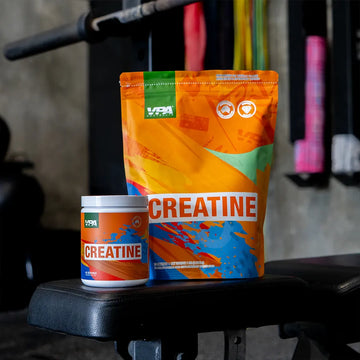
VPA Creatine Monohydrate is 100% pure, pharmaceutical-grade, and micronised for easy mixing. At just 5g per serving, you can take it anytime - pre-workout, post-workout, with meals. The question of creatine before or after a workout matters less than consistency - daily intake is what drives results. A loading phase (0.3g per kg bodyweight for 5-7 days) speeds results, but it's not necessary. You'll see gains within 2-4 weeks of consistent use.
Side note: Creatine doesn't cause cramping, kidney problems, or water retention (beyond normal muscle hydration), but if you’re dealing with a medical issue, it’s always best to consult a professional first.
Pre-Workout — Training Harder Means Training Better
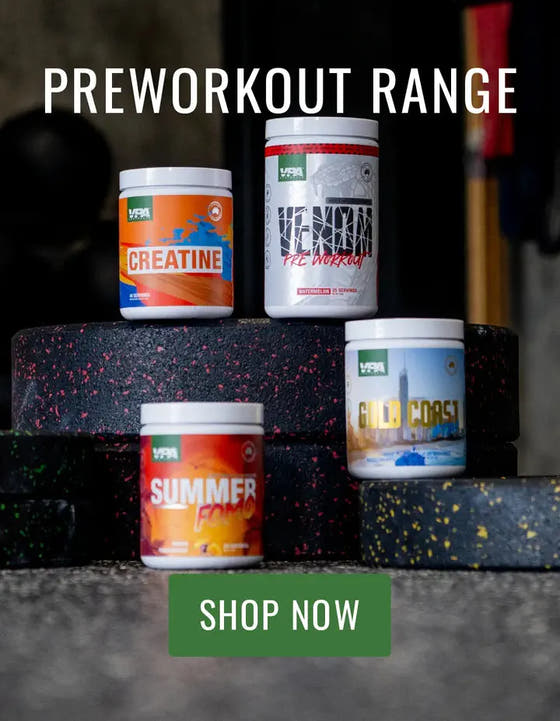
Pre-workout supplements give you the energy and focus to push harder. VPA's pre-workout range includes options for every goal:
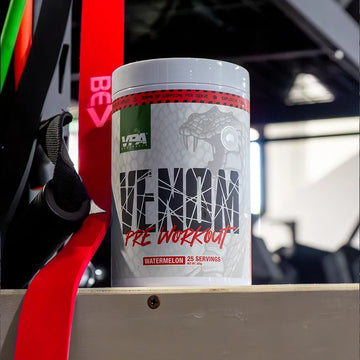
- Venom (High Stim): For intense, heavy sessions. Contains creatine monohydrate, beta-alanine, citrulline malate, caffeine, and more. Perfect for strength-focused days.
-
Gold Coast Stim: Beginner-friendly with balanced caffeine and B-vitamins. Great entry point if you're new to pre-workouts.
-
Summer FOMO: Fat-burner formula combining caffeine with ingredients like L-carnitine and konjac root. Ideal if you're training in a calorie deficit.
Take it 20-30 minutes before your workout. The peak effect hits around 45 minutes. Don't take it too late in the day - caffeine disrupts sleep, and sleep is when recovery happens.
BCAAs / EAAs — Supporting Muscle Under Load
BCAA benefits are well-researched and well-known. Branched-chain amino acids (BCAAs) are essential amino acids that play an important role in muscle protein synthesis and recovery. During intense training, supplementing with BCAAs helps reduce muscle breakdown and speed up recovery.
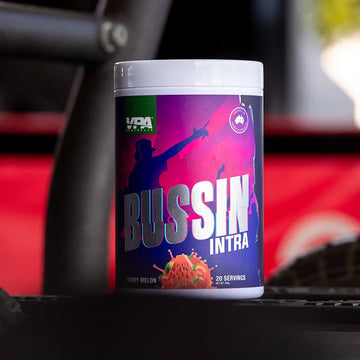
VPA BUSSIN INTRA is a complete intra-workout formula combining BCAAs in an optimal 2:1:1 ratio with L-glutamine (which supports muscle protein synthesis), citrulline malate (which improves blood flow and nutrient delivery), and electrolytes (sodium, potassium, magnesium, calcium) lost through sweat.
Sip it during or immediately after training. The electrolytes keep you hydrated, the BCAAs support muscle preservation, and the citrulline malate improves blood flow for faster nutrient delivery.
Magnesium / ZMA6 — Recovery Is Where Strength Is Built
We can’t stress this enough: strength is built during recovery, not in the gym. Training is the stimulus, sleep and recovery are where adaptation happens.
When you train hard, you deplete zinc and magnesium through sweat and metabolic stress. Your nervous system is activated, sleep suffers and performance plateaus. This is why good-quality muscle recovery supplements are essential.
VPA ZMA6 Recovery combines magnesium (for muscle relaxation and nervous system function), zinc (essential for protein synthesis), L-glutamine (supports muscle recovery), and GABA (promotes sleep). It's not magic, but when you've got your training, nutrition, and sleep dialled in, ZMA6 gives your recovery the mineral support it needs.
Take it 30-60 minutes before bed on an empty stomach for best absorption. The magnesium helps you relax, the zinc and L-glutamine work throughout the night to support muscle repair, and GABA promotes deep sleep.
You'll wake up more recovered, stronger, and ready to train again.
Conclusion
Functional strength training isn't a trend. It's a return to training that actually matters - building strength that transfers to sport, work, and life. Whether you're an elite athlete, a gym enthusiast, or someone who simply wants to be stronger and more capable, functional strength training is important.
The movement patterns are simple: squat, hinge, push, pull, lunge, rotate, carry. Build these patterns with progressive load and consistency. Fuel your training with proper nutrition and supplementation, prioritise recovery, and the results follow.
VPA Australia has been at the forefront of sports nutrition since 2009, delivering science-backed supplements trusted by athletes and everyday movers. We've been voted Australia's #1 supplement brand 8 years in a row - not because of marketing hype, but because we deliver results. From whey protein to creatine to recovery support, we've got all the tools to fuel your functional strength training journey.
Train smart. Recover hard. Move better.
Frequently Asked Questions
What are the 7 functional movement patterns?
The 7 functional movement patterns are: squat, hip hinge, horizontal push, vertical push, horizontal pull, vertical pull, lunge/single-leg movements, rotation/anti-rotation, and carry. These patterns cover every movement your body naturally performs.
Is pilates functional strength training?
Pilates is a form of exercise that builds core strength and stability, which are components of functional fitness. However, pilates alone doesn't provide the load-bearing strength development or sport-specific training that functional strength training offers. Basically, pilates is complementary to functional fitness, not a replacement.
Can you build muscle with functional training?
Yes. Functional strength training, especially when it includes hypertrophy-focused work (moderate to high reps with shorter rest periods), builds significant muscle mass. The compound movements of functional exercises engage large muscle groups simultaneously, creating the stimulus needed for growth. Combine that with adequate protein intake and recovery, and you'll build muscle effectively.
How many days a week should I do functional strength training?
A well-designed functional strength training programme typically runs 3-4 days per week with rest days in between. This allows sufficient recovery time while providing enough stimulus for strength and conditioning gains. Beginners might start with 3 days, and more advanced trainees can handle 4 days. The key is consistency and quality over frequency.
What's the difference between functional training and CrossFit?
CrossFit is a competitive sport with specific movement standards, scaling options, and workout formats (WODs - workouts of the day). Functional training is a training philosophy focused on movements that transfer to real life. CrossFit has certain functional movements, but adds elements like Olympic lifting technique and competitive intensity. Not all functional fitness is CrossFit, and not all CrossFit is specifically functional training.
References:
-
Cave, K. (n.d.). Functional training: Compound workouts for fitness. NASM Blog. https://blog.nasm.org/functional-training-compound-workouts
-
Verve Fitness. (n.d.). The difference between strength training and functional training? https://www.vervefitness.com.au/blogs/all/what-is-the-difference-between-strength-training-and-functional-training
-
Borland, B. (2021, April 7). The tactical physique: A functional strength training & conditioning workout. Muscle & Strength. https://www.muscleandstrength.com/workouts/tactical-physique-strength-conditioning-workout
-
Sweat. (2025, September 18). Build real-life strength with functional strength training. https://sweat.com/blogs/fitness/functional-strength-training
-
Mayo Clinic Staff. (2023, December 13). Creatine. Mayo Clinic. https://www.mayoclinic.org/drugs-supplements-creatine/art-20347591
-
Booth, S., & Schmidt, N. (2025, July 29). What is ZMA? WebMD. https://www.webmd.com/vitamins-and-supplements/zma-supplements
- Functional training. (n.d.). In Wikipedia. Retrieved April 8, 2026, from https://en.wikipedia.org/wiki/Functional_training


