



![[Batch-tested] Collagen Pro® - Protein Powder](http://www.vpa.com.au/cdn/shop/files/vpa-australia-collagen-powder.webp?v=1770851517&width=360)



TL;DR
21.1km. It sounds like a lot. It's not - if you train smart. This guide covers a proven 12-week half-marathon training plan for beginners and intermediates who want to cross the finish line strong, not just survive it. You'll run 4 days a week, build your long run progressively, add tempo work from week 5, and taper properly in the final week. But here's what most half-marathon training plans miss: nutrition. Your legs can carry you 21.1km, but your nutrition decides whether it feels like 15 or 30. We'll cover that too.
What Is a Half Marathon? Distance, Time & What to Expect
How Far Is a Half-Marathon in KM?
A half-marathon is 21.0975km, typically rounded to 21.1km. For context, it's just over four times a 5km run or roughly double a 10km effort. That extra kilometre matters because it's where training separates those who finish comfortably from those who struggle.
How Long Does It Take to Run a Half Marathon?
Finish times vary based on fitness level and training quality. Here's what average half-marathon time looks like based on levels:
| Beginner | 2:30+ |
| Intermediate | 2:00-2:30 |
| Experienced | Sub 2:00 |
Most first-timers finish between 2:15 and 2:45, which is 6:25–7:50 per kilometre. This pace is sustainable with proper training.
Is a Half Marathon Right for You?
Ask yourself three honest questions before starting.
-
Can you run 5km comfortably right now?
If not, build that base first. A couch-to-half-marathon approach needs 16 weeks minimum, not 12.
-
Do you have 4-6 hours per week for training?
Most time goes to your long run, with shorter runs and strength work filling the rest. If you're already running 15-20km weekly, 12 weeks works. If you're starting fresh, extend to 16 weeks.
-
Are you willing to prioritise recovery?
Training creates the stimulus, but recovery is where adaptation happens. Sleep, nutrition, and rest days matter.
How Long Should You Train for a Half Marathon?
When it comes to how to train for a half-marathon and how long to train for a half-marathon, it all starts with choosing the right timeframe. Why? Because running stresses your joints, tendons, and nervous system. Rush it, and the risk of an injury increases around week 8 or 9. That's when most people drop out. So, go for:
-
Twelve weeks work if you already have a base. Ideally, you've been running 3-4 times weekly for at least 8 weeks.
-
Sixteen weeks if you’re a complete beginner (especially if you're following a couch-to-half-marathon approach). This gives your body time to adapt without injury risk.
- And if you’re starting from zero, follow this plan, but repeat weeks 1-4 before moving to week 5. This extends your timeline to 16 weeks and cuts injury risk dramatically.
The 5 Types of Runs in Your Half-Marathon Training Plan
Easy Runs — Your Bread and Butter
Easy runs are conversational pace. You can talk in full sentences, but you're working hard enough that you can't sing. These build your aerobic base without hammering your nervous system. Most of your running should be easy - about 80% of your total volume.
Long Runs — Building Your Endurance Base
Long runs start at 8km and build to 17-18km by week 10. Keep the pace easy. The goal is to build time on feet and to teach your body to use fat as fuel. Long runs build mental toughness, too. You'll face real discomfort around km 12-15. Building endurance means training your cardiovascular system to sustain effort, your muscles to resist fatigue, and your mind to push through discomfort.
Tempo Runs — Training Your Lactate Threshold
Tempo runs start in week 5. You'll run at a "comfortably hard" pace - faster than easy but not an all-out sprint. These teach your body to process lactate efficiently, which delays fatigue. A typical tempo run is 10 minutes warm-up, 20–30 minutes at tempo pace, then 10 minutes cool-down.
Interval Training — Getting Faster Without Getting Injured
Short, hard efforts (400m–1km) with recovery periods. Interval training running improves VO2 max and running economy - how much oxygen you need to run at a given pace. They build speed without requiring you to sustain that pace for long, which is safer than constant fast running.
Cross-Training & Rest Days — The Runs You Don't Run
Swimming, cycling, or strength work on cross-training days builds fitness in different patterns, strengthening stabiliser muscles and reducing overuse injury risk. Rest days are non-negotiable. Your body adapts during rest, not during the workout. Active recovery through easy cross-training sessions is important too.
Strength Training for Runners: Why You Can't Ignore the Gym
Most runners treat strength training as optional. Then they hit km 18 and their glutes shut down. That's not aerobic fitness failing - that's structural weakness.
Strength training for runners cuts injury risk by nearly two-thirds. It also improves running economy, meaning you use less oxygen at the same pace. Even light work around 2-3 times weekly improves 5K times.
Functional strength training is key. Rather than isolating single muscles, functional exercises train movement patterns that transfer directly to running.
Focus on these patterns: Single-leg exercises like split squats build hip stability and prevent the compensation patterns that lead to knee and ankle injuries. Hip hinge patterns like deadlifts strengthen your glutes and hamstrings - the muscles that actually propel you. Core work through planks and bird dogs maintains posture when fatigue hits. Calf raises build ankle resilience since running is controlled falling forward.
Do 2-3 strength sessions weekly, 25-30 minutes each. Keep it simple: 3-4 compound movements, 10-15 reps, 2-3 sets. And remember: you're training for resilience and injury prevention, not muscle growth.
Your 12-Week Half Marathon Training Plan
Learning how to train for a half-marathon doesn't need to be complicated. This plan assumes you can run 5km comfortably. If not, spend 4 weeks building that base first.
The plan has three phases:
-
Phase 1 (weeks 1-4) builds your aerobic foundation.
-
Phase 2 (weeks 5-9) adds intensity.
-
Phase 3 (weeks 10-11) peaks your fitness.
-
Week 12 is taper.
Phase 1 (Weeks 1–4): Build Your Base
Your job is to get comfortable running 3-4 times weekly, with one long run building from 8km to 11km.
| Monday | Easy Run | 5km conversational pace |
| Tuesday | Strength | 30 mins: squats, deadlifts, core |
| Wednesday | Easy Run | 5-6km steady pace |
| Thursday | Active Recovery | Swimming, cycling, or yoga |
| Friday | Easy Run | 5-6km steady pace |
| Saturday | Long Run | Week 1: 8km. Week 2: 9km. Week 3: 10km. Week 4: 11km. Easy pace. |
| Sunday | Rest | Full recovery |
You're building your aerobic engine. You'll feel stronger each week, and your resting heart rate will drop.
Phase 2 (Weeks 5–9): Build Your Fitness
Intensity enters. You'll add tempo runs and combine run types. Long run pushes toward 17km.
| Monday | Easy Run | 5-6km |
| Tuesday | Strength | 30 mins: single-leg work, calf raises, core |
| Wednesday | Tempo Run | 10-min warm-up + 20 mins comfortably hard + 10-min cool-down |
| Thursday | Cross-Training | Swimming or cycling, 30–40 mins easy |
| Friday | Easy Run | 5-6km |
| Saturday | Long Run | Week 5: 12km. Week 6: 13km. Week 7: 14km. Week 8: 15km. Week 9: 17km. Easy pace. |
| Sunday | Rest | Full recovery |
You'll feel much stronger by week 9. Sleep and nutrition become increasingly critical.
Fuelling note: If your long run goes beyond 90 minutes, bring fuel. RPG Gel delivers 25g of carbs plus 500mg of BCAAs and electrolytes in a compact sachet. Take one around the 45-minute mark with water. One gel every 45 minutes prevents the energy crash that derails your final kilometres.
Phase 3 (Weeks 10–11): Peak & Polish
Volume stays high, intensity steps up slightly. You're rehearsing race conditions now.
| Monday | Easy Run | 5km |
| Tuesday | Strength | 30 mins: compound lifts at lighter loads |
| Wednesday | Interval Training | 10-min warm-up + 6 × 800m faster + 10-min cool-down |
| Thursday | Easy Run | 5–6km |
| Friday | Long Run | Week 10: 18km easy. Week 11: 19km easy. |
| Saturday | Active Recovery (Cross-training sessions) | 20–30 mins easy |
| Sunday | Rest | Full recovery |
Your body is peaked. You might feel slightly tired - that's normal.
Week 12: Taper Week
You'll feel like you should do more. Don't. Trust your training.
| Monday | Easy Run | 4km |
| Tuesday | Strength | 20 mins light only |
| Wednesday | Easy Run | 3km |
| Thursday | Rest | Full recovery |
| Friday | Easy Run | 3km + 2 × 400m race pace |
| Saturday | Rest | Prepare kit. Hydrate. |
| Sunday | HALF MARATHON | 21.1km. You're ready. |
Half-Marathon Pace Guide — How to Run Your Best Race
How to Calculate Your Half-Marathon Pace
Divide your goal finish time by 21.1km. Want to finish in 2 hours? That's 5:40 per km. Want to do it in 2:15? You’re looking at 6:25 per km. A conservative approach: take the pace you can sustain for 10km and slow it by 15-20 seconds per km. That's your race pace.
The 80/20 Rule — Why Most of Your Running Should Feel Easy
80% of your training should feel easy. 20% should feel hard. Most runners flip this. They run most efforts at a moderate pace - not easy, not hard. That middle zone is the least productive.
Easy runs build aerobic capacity without fatigue. Hard sessions trigger adaptations. Understanding endurance vs stamina helps here - stamina is sustained moderate effort, while endurance is the ability to keep going when truly fatigued.
If your easy pace feels too slow, you're still going too fast.
What to Eat When Training for a Half Marathon
Daily Nutrition During Training
Eat real food first. Include protein with every meal (aim for 1.6-2.2g per kg of body weight daily). Time carbs around training (most runners undereat during training). Your body burns extra calories - so fuel it properly.
What to Eat Before a Half Marathon
Three hours before a half-marathon, have a normal breakfast with carbs and protein. Nothing new, nothing heavy. Thirty to sixty minutes before: get a light snack, like a banana if needed. And don’t forget to hydrate consistently - aim for pale yellow urine.
Fuelling During the Race — Gels, Electrolytes & Timing
Most runners don't fuel during a half-marathon. They should. Your muscles store roughly 90 minutes of glycogen. After that, external fuel becomes essential.
Strategy: Take your first gel around 30-45 minutes in. Then one every 45 minutes. For a 2:15 half-marathon, that's 2-3 gels in total.
RPG Gel delivers 25g of carbs plus 500mg of BCAAs and electrolytes in an easy-to-consume sachet. Take it with water, not a sports drink, to avoid stomach upset. If it's hot, Hydration Fuel replaces sodium and potassium lost through sweat. Best part? It's low in sugar.
Post-Race Recovery Nutrition
The first 30 minutes after finishing matter A LOT. Aim for 20-30g of protein plus 40-60g of carbs within 30 minutes. This is when muscle protein synthesis peaks and glycogen replenishment is most efficient.
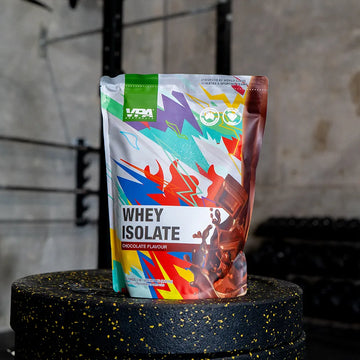
Whey Protein Isolate delivers 27g of protein per serve with minimal fat and carbs. It's fast-absorbing, so your muscles get amino acids quickly. Pair it with fruit, rice, or toast for carbs.
You can also have Hydration Fuel - it helps replenish electrolytes lost through sweat during your race effort. The 312mg of sodium and 208mg of potassium per serve support rehydration and help your body retain fluids more effectively than water alone. Have it along with your protein source to fully restore your system and kickstart recovery.
Nutrition for injury recovery: If you experience any niggles or injury during training, proper nutrition becomes even more important. Adequate protein supports tissue repair, carbs replenish energy for healing, and anti-inflammatory foods reduce swelling. So keep this in mind.
The Half Marathon Supplement Stack — What Actually Helps
The right muscle recovery supplements can make a huge difference in how well you bounce back between training sessions.
Electrolytes — Prevent Cramping & Maintain Performance
Hydration Fuel delivers 312mg sodium, 208mg potassium, and essential minerals per serve. During half-marathon training and racing, electrolytes maintain nerve function, muscle contraction, and fluid balance. On hot days or when you sweat heavily, electrolyte powders prevent cramping that can derail your final kilometres.
Protein (WPI) — Post-Run Muscle Repair & Adaptation
Whey Protein Isolate (WPI) is your post-workout go-to. 27g of protein per serve, ultra-pure, fast-absorbing. Your muscles use amino acids to rebuild and grow stronger. We always recommend having whole foods first, but when you're busy and protein matters, WPI closes the gap.
Creatine — Often Overlooked for Runners, But Improves Training Quality
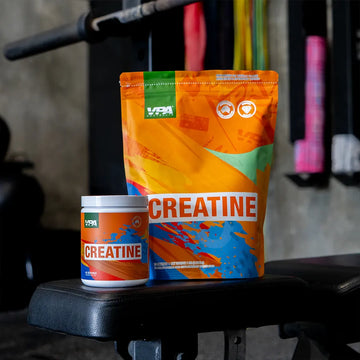
Now, what is Creatine Monohydrate? It’s a supplement that doesn't directly make you faster at steady running, but it improves your capacity during strength training and interval work. 5g daily improves power output in sprints and hill repeats. For runners doing strength work, that translates to better running economy. Take Creatine Monohydrate consistently - it takes 3-4 weeks to saturate muscle stores.
BCAAs/EAAs — Intra-Training Support for Longer Runs
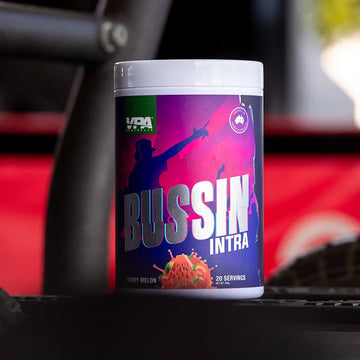
BUSSIN INTRA combines BCAAs with citrulline malate and electrolytes. During runs longer than 90 minutes, this supports muscle protein synthesis and reduces breakdown. Other BCAA benefits include reduced muscle soreness after hard training and faster recovery between sessions, which matters when you're stacking multiple efforts throughout your week.
A BCAA supplement is not essential for a half-marathon where carbs matter more, but it helps if you're sensitive to muscle soreness or training at high volume.
Collagen + Vitamin C — Joint & Connective Tissue Protection
Collagen Pro® isn't flashy, but it works. 10-15g daily with vitamin C supports tendon health and connective tissue resilience. Over 8-12 weeks of training, collagen for tendon and muscle repair reduces joint soreness and supports faster recovery.
Magnesium/ZMA6 — Sleep Quality & Overnight Recovery
ZMA6 Recovery combines magnesium, zinc, and glutamine to support sleep and recovery after hard training. Hard training depletes these minerals through sweat, and most diets don't fully replace what's lost. Magnesium promotes sleep and muscle relaxation while zinc supports protein synthesis. Take it 30-60 minutes before bed to improve sleep quality, since that's where your training adaptations truly happen.
Check out our full range of endurance supplements here.
Half Marathon Training Tips From the Trenches
-
Train in the shoes you'll race in at least eight weeks before, not two weeks before. Your feet adapt to specific shoes. Race-day surprises are unwelcome.
-
Don't try new food on race day. Test every gel, breakfast, and electrolyte drink during training. Your gut on race day is unpredictable.
-
Run at least one long run at your race-day start time. Your body adapts to specific times. Morning glycogen is lower than afternoon glycogen. Train the condition.
-
Walk breaks aren't failure. The Jeff Galloway method works. A 90-second run plus a 30-second walk every 10 minutes can improve your finish time compared to struggling non-stop.
-
Hill running makes you faster on flat ground. Include one hilly run every 2–3 weeks. Hills build strength and running economy. Race day on flat terrain, you'll feel like you're flying.
-
Interval training running is another way to build speed. Perform short, hard efforts with recovery periods between them to improve your fitness. Include these once weekly during Phase 2 and 3 to develop the speed you need on race day.
-
Strength training prevents injuries more than anything else. Stretching is fine, but weak muscles are the real injury culprit. Two sessions weekly focused on glutes, hips, and core reduces injury risk by nearly two-thirds.
-
Running cadence matters more than most runners realise, especially late in a race when fatigue builds. Most runners have a natural cadence. Aim for 170-180 steps per minute. You can count steps for 15 seconds and multiply by four, or use a running app. Higher cadence reduces joint impact and improves efficiency.
Half Marathon Events in Australia — Where to Put Your Training to the Test
-
The HOKA Runaway Sydney Half Marathon (May) is Australia's most iconic half-marathon with over 25,000 runners. The course winds through Sydney CBD with stunning views, and autumn timing offers perfect conditions. It sells out.
-
Run Melbourne and community events throughout Victoria offer flat, fast courses ideal for PBs in May.
-
Sunshine Coast Half Marathon (May) attracts runners looking for coastal scenery and warm weather.
-
Brisbane's City Botanic Gardens hosts community half marathons throughout the year.
-
Ballarat, Newcastle, Canberra, Adelaide, and Perth all host regular half marathons. Check your local running calendar for events near you.
VPA community events in Australia are also a good option. Train alongside a community that takes performance seriously by checking out upcoming VPA events in your area.
Ready to put your training to the test? Pick your race, commit to this 12-week plan, fuel smart, and show up prepared. You've got everything you need to finish strong. Head to VPA's website to explore the full range of supplements for runners and endurance athletes that'll support your journey from week 1 to race day.
Frequently Asked Questions
How many days a week should I train for a half-marathon?
Four days minimum. Three runs weekly plus one strength or cross-training session. This provides enough stimulus without excessive fatigue. If you're at risk for injury or new to running, start with three days and build toward four.
Can a beginner run a half-marathon in 12 weeks?
Yes, if they can already run 5km comfortably. If they can't, extend to 16 weeks. Rushing leads to injury. Be honest about your starting point.
What is a good half-marathon time for a beginner?
Finishing is the goal. Anything under 2:45 is good for a first-timer. The average half-marathon time for beginners ranges from 2:15 to 2:45, which is usually great. Sub 2:00 is excellent and requires consistent training over months.
Should I take supplements while training for a half-marathon?
Protein and electrolytes matter. Creatine helps if you're doing strength work. Everything else is optional. Get the basics right first: sleep 7-9 hours, eat real food, drink water, do your training. Supplements amplify good habits - they don't replace them.
How do I prevent injury during half-marathon training?
Strength train 2-3 times weekly. Run 80% of your training easy. Build volume gradually without exceeding 10% weekly increases. Listen to your body - soreness is normal, sharp pain isn't. Get adequate sleep and nutrition. Don't skip rest days.
References:
-
Runtastic Events. (n.d.). 12 week beginner half training plan. https://runtasticevents.com/training-programs/12-week-beginner-half-training-plan/
-
Higdon, H. (n.d.). Half marathon training: Novice 1. https://www.halhigdon.com/training-programs/half-marathon-training/novice-1-half-marathon/
-
Powerstep. (n.d.). 12-Week half marathon training plan for beginners. https://powerstep.com/blogs/news/12-week-half-marathon-training-plan-for-beginners
-
Runners Need. (n.d.). Everything you need to know about energy gels. https://www.runnersneed.com/expert-advice/nutrition-and-hydration/energy-gels.html
-
Dale-Tooze, L. (2025, April 11). Strength training for runners: Improve your running performance by lifting weights. Gymshark. https://www.gymshark.com/blog/article/strength-training-for-running
-
OC Marathon. (n.d.). Does creatine help with running? What you need to know. https://ocmarathon.com/does-creatine-help-with-running/
-
Gray, A. (2023, November 27). The benefits of BCAAs for runners & why you need them. AG Injury Rehab. https://aginjuryrehab.co.uk/blogs/running/the-benefits-of-bcaas-for-runners-why-you-need-them
-
Booth, S., & Schmidt, N. (2025, July 29). What is ZMA? WebMD. https://www.webmd.com/vitamins-and-supplements/zma-supplements
-
HOKA Runaway Sydney Half Marathon. (n.d.). HOKA Runaway Sydney Half Marathon. https://runawaysydneyhalf.com.au/
-
RunGuides. (n.d.). Half marathons near Australia. https://www.runguides.com/australia/runs/half-marathon/all
-
Run Melbourne. (n.d.). Run Melbourne. https://runmelbourne.com.au/
-
Running Calendar Australia. (2025, October 20). Sunshine Coast Marathon Festival. https://www.runningcalendar.com.au/event/sunshine-coast-marathon/
- Šuc, A., Šarko, P., Pleša, J., & Kozinc, Ž. (2022, June 24). Resistance exercise for improving running economy and running biomechanics and decreasing running-related injury risk: A narrative review. Sports, 10(7), 98. https://doi.org/10.3390/sports10070098


